

Hi All,
I just want to make you all aware that there is a very beneficial menu on Android that you can access to measure sensory features of your device and one of those features is the light sensor which is measured in lux, now I am not sure how accurate the reading is or how far you need to have your phone away from the light to get an accurate lux reading but, it seems to work on my device.
If you dial *#0*# on a Samsung device (not sure if this applies to other devices) it brings up a menu with all the sensory tests/features and gives you an option for the light sensor.
I'd be very interested to know how well this actually works for others and how accurate it actually is, let me know how you all get along.
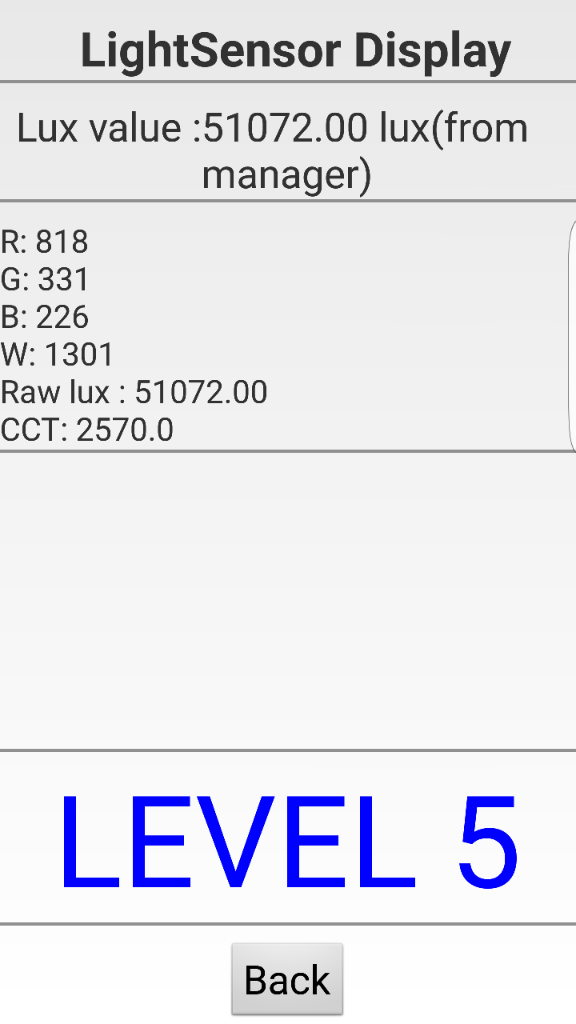
Here is a lux reading via the *#0*# menu at about 1 foot (may be a bit more) from my 400w HPS bulb from my Samsung S6.
Thoughts and comments would be ace!
I just want to make you all aware that there is a very beneficial menu on Android that you can access to measure sensory features of your device and one of those features is the light sensor which is measured in lux, now I am not sure how accurate the reading is or how far you need to have your phone away from the light to get an accurate lux reading but, it seems to work on my device.
If you dial *#0*# on a Samsung device (not sure if this applies to other devices) it brings up a menu with all the sensory tests/features and gives you an option for the light sensor.
I'd be very interested to know how well this actually works for others and how accurate it actually is, let me know how you all get along.
Here is a lux reading via the *#0*# menu at about 1 foot (may be a bit more) from my 400w HPS bulb from my Samsung S6.
Thoughts and comments would be ace!


