Yeah, red wrigglers are the composting kings of worms. They're in the top layer of whatever they're in. I have used them for Vermicomposting for the past 30 years.
There are other worms but they are just not as prolific in breeding and eating and are a bit less hardy.
I have raised African nightcrawlers, but they composting type worms. I raised them for fishing and for placement in the garden. African Night crawlers Burrow
deep into the soil. I used them at my old farm in my garden spot for them to Burrow deeply to get to the mineral rich clay layer for my plants to send down roots easier. African nightcrawlers are not really communal worms so to speak.
I really don't have enough vegetable waste to feed them, so I have to make my own. I really need to good sized batch.
Things I use that I don't have to buy:
Defoliation of my girls. I chop the leaves up and then place them in a blender to get a nice consistent slurry. If I'm not making any food at that time I'll just put them in plastic bags and freeze it. Be very careful when blending to not overheat the material.
I also use the bulk material that I strained off from making

J (Fermented Fruit Juice)
Then I've got a bag that I daily banana skins in that keep in the freezer.
The bulk material from making (Sprouted Seed Tea) from two row barley.
CO
EE GROUNDS!!! Worms LOVE it. I purchased a container, for the the Little Community Cafe that was close to my farm, to collect all their coffee grounds.
Then I have my purchased ingredients.
Organic alfalfa pellets, mainly intended for rabbits. They do pellets for horses but they're bigger and you can't really confirm whether they're organic or not.................. and that's just searching locally without purchasing over the net.
Organic chicken laying crumble........... Lots of good sprouted seeds and additional calcium for the laying hens.
Thorvin kelp.................... That's pretty powerful stuff so I use it at a fairly low rate.
I also add avocados, mainly because the worms really love it. Avocados are the easiest way gather your worms if you wanna utilize them in your pots. Just cut them in half and lay them on top of the soil. In just a few days you'll see an orgy underneath it.
And one of the more recent additions, Montana Grow, a volcanic tuft that is mainly high quality silica. I used to only use it in my top dressings. I now grind it up a bit finer and add it to my feed to aid the worm's gizzard in digestion.
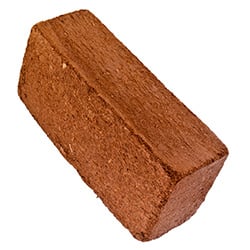
For simplicity, I use the Coconut Coir Brick. One of the key elements in raising Worms is the moisture level in the bin. Too much moisture and the worms can't breathe. The coconut helps with that proper feeding. If you have worm juice coming out of the bottom of your bin, you have too much moisture.
Upgrade your garden with Coconut Coir Brick, a natural and renewable alternative to peat moss. Great for the worm bin with excellent water holding capacity.

unclejimswormfarm.com
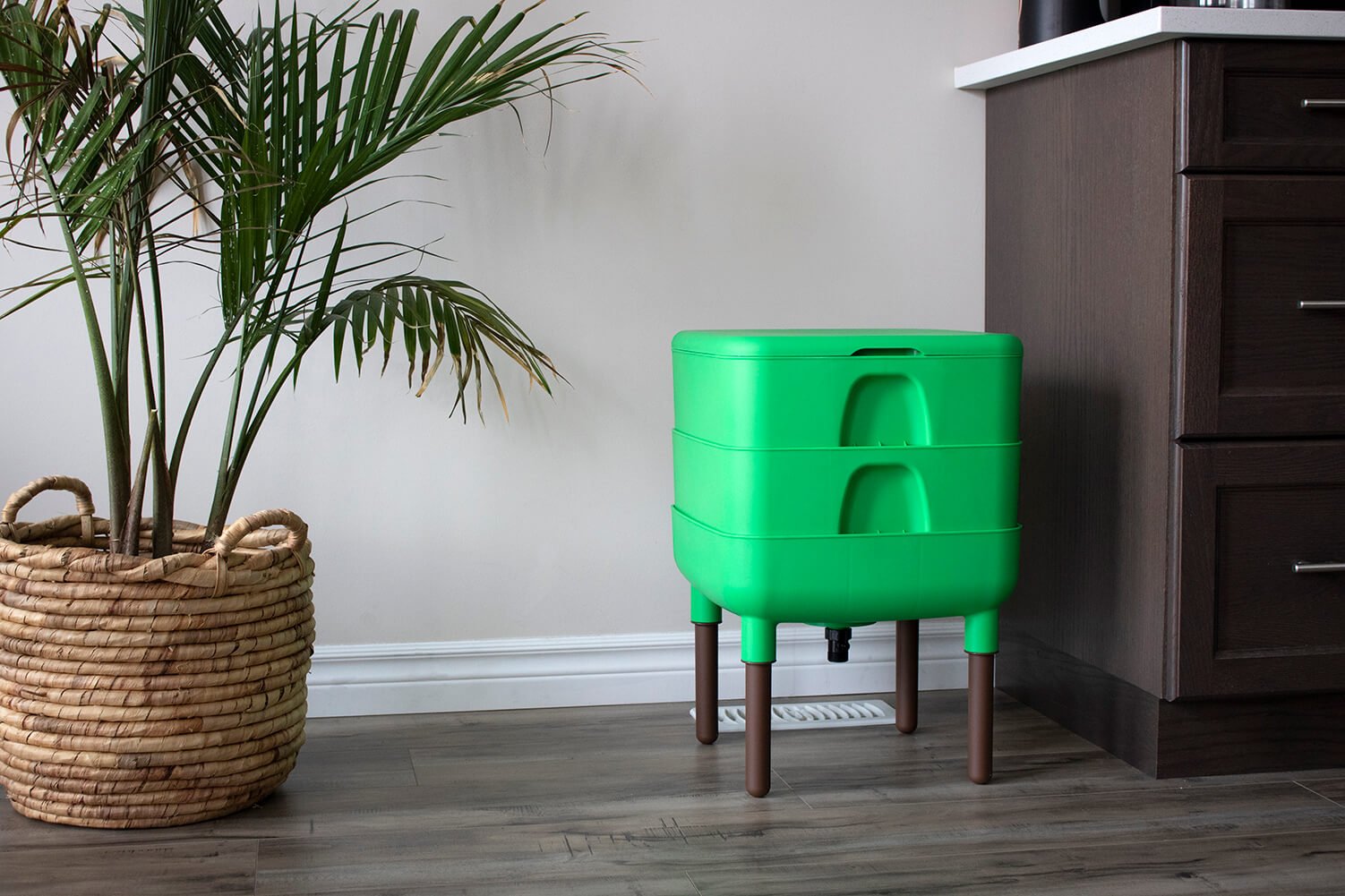
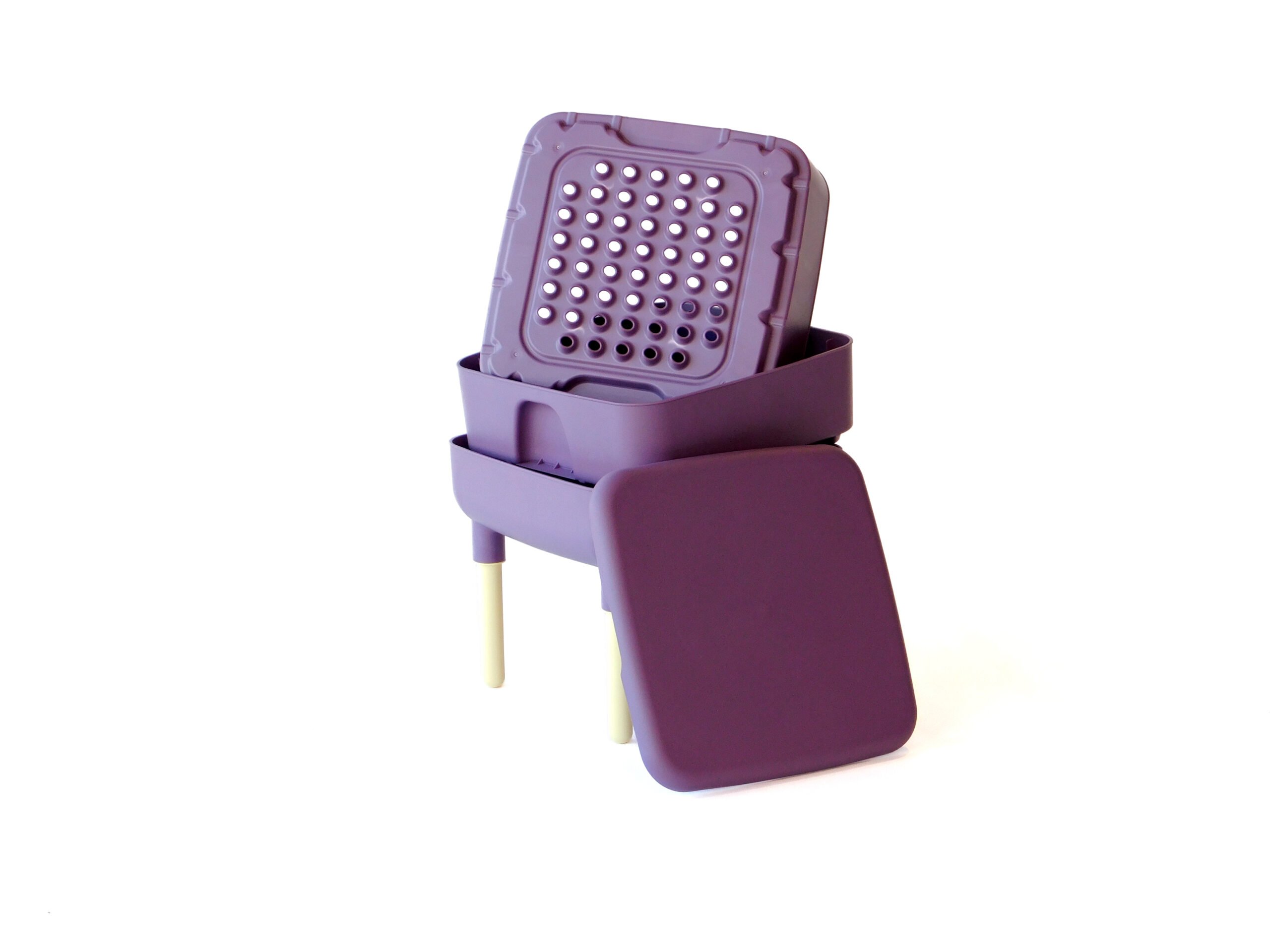
This worm bin acts essentially the same as your bucket system. Once it's time the top layer has become mainly castings, You make a fresh section of the bin, add feed and place it on top. The worms will continue to clean up the bin that they are in and when the food is getting scarce, they move up to the fresh food in the new bin Through the migration holes at the bottom..
It takes about three to four months to fill one of these sections with castings. That's quite a bit of earthworm castings with this bin.
I do find it amazing at the difference in the weight of a finished bin of castings.
I have two of the same worm bins. Along with worm castings, I've grown quite a bit of worms! In I would add worms to my pots, but when I Would dump the pots into a tote too Re amend everything and let it cook, I didn't pull my worms. They can't survive the heat during re-amending process. So during this sabbatical of not growing, I have accumulated quite a bit more worms, hence the second tote.
I really do like this Hot Frog worm bin. It is
very well made and everything fits together so that the worms don't crawl out. There is also no smell, partly due to the well sealing and partly due to the way I run it. Yeah, I do think it is a bit expensive, but I do think it is worth it. I think I've had mine for 4 years now with no problems, not that you'd expect any but I guess you could poor made products.
Since we really cannot
buy the same quality earthworm castings that you can make yourself, I think every living earth or just organic grower should have one of these.