
sorry about all of the reading, I already and ordered some of these things, I hope I can use this soil. Base Soil:
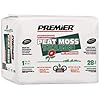 Canadian Sphagnum Peat Moss
 Aeration amendment (to help with drainage and allow oxygen into the soil). Some common aeration amendments are: perlite, pumice, turface, rice hulls, calcined diatomaceous earth (Napa Auto parts product # ). You only need to pick one of these, and you should choose whatever's cheapest and most easily sourced. If using perlite, make sure that your perlite does not have slow release chemical fertilizers added (Miracle gro perlite has chemical fertilizer added and should be avoided)
 Humus (compost/earth worm castings (ewc) ). High quality humus is the key ingredient in an organic soil. Without good humus you've just got a bucket of peat moss and some amendments. You don't have to add both compost and ewc, just one will do, but if you have access to both, the more diversity the better. The bagged manure compost from the store really won't do. Look on craigslist for a local source for compost or ewc. There are some good bagged composts like Coast of Maine bagged composts, Bu's Blend Organic Biodynamic compost, and Farmer D's Organic Biodynamic compost. EWC can be bought on ebay. If your budget won't allow you to buy enough high quality humus (or if you'd have to order it all), buy as much good ewc as you can. Then buy the best bagged compost available in your area. If you want, you can make an ACT with a small amount of the ewc and use it to inoculate the bagged compost. This will increase the viability of the bagged compost.
Nutritional Amendments:
 Dry Organic Fertilizer. My favorite is Espoma "tomato tone". Espoma "garden tone" and "plant tone" are also excellent choices. More good choices are Dr. Earth "all purpose" or "tomato and vegetable blend" and Down to Earth "all purpose blend". Use what you have available.
 Kelp meal. Kelp meal is a good source of K, but its real value lies in its micronutrient content. Kelp meal contains all the micronutrients your plants need, and it's also full of growth-stimulating plant compounds.
Mineral Amendments:
 Lime. Used to neutralize the acidity of the peat moss and help stabilize pH. Look for agricultural lime, garden lime, or dolomite lime. Avoid "fast acting" or "hydrated" lime-these have been treated with chemicals that you do not want in your garden.
 Rock Dust. Rock dust helps to mineralize the soil but it's real value is as a "home" for the microbes and an anchor for the fungal hyphae in our soil (see jerry's excellent "rock dust" thread for more info). Dust from igneous rocks like granite, basalt, azomite, glacial rock dust, etc. is what you want. Granite dust can be found very cheaply at a local stone cutting place or at a place that sells mulch/topsoil/gravel/stones. Granite dust is an excellent rock dust and this is the cheapest option.
Now for the soil mix. First you want to make a base mix comprised of peat moss, humus (compost and/or ewc), your aeration amendment of choice, and lime. The soil mix should be about 1/3 peat moss, 1/3 humus, and 1/3 aeration amendment (don't stress out if you add a little too much of one thing or your ratios aren't exact, it will be okay). If you want to use a 50/25/25 ratio of peat moss/perlite/humus, that's fine too. You can use a 5 gallon bucket (or a 1 gallon bucket) to measure. Remember when making your soil that 1 cubic foot = 7.5 gallons. You can use just the plain base soil for starting your seeds and clones.
Note: we are using a 5 gallon bucket to measure, so 1 part=1 full 5 gallon bucket, 1/2 part=1/2 of a 5 gallon bucket, or 2.5 gallons
To make 1 cubic foot (7.5 gallons) of base soil:
1/2 part peat moss
1/2 part humus (compost and/or ewc- can do all compost or all ewc or some mixture of the two)
1/2 part aeration amendment
1 cup lime (per cubic foot)
Nutritional amendments: you want to add about 2-3 cups total of all your nutritional amendments per cubic foot (7.5 gallons) of soil. Note that this means 2-3 cups total, a combination of all your nutritional amendments, not 2-3 cups of each amendment.
1 cup kelp meal
1.5 cups dry organic fertilizer
Mineral amendment: now add 4 cups of your rock dust per cubic foot (7.5 gallons) of soil
Mix all the above ingredients well. Now moisten the soil by adding water and mixing until the soil is about as damp as a well-wrung out sponge. Now let the soil sit for 3-4 weeks to allow the microbes to begin to break down the amendments and convert the nutrients into a form that the plant can use. This process of nutrient cycling is also referred to as "cooking". Neither heat nor the sun are required, the soil can "cook" inside just fine. You can go ahead and fill up the pots you plan to use and let the soil "cook" in the pots. You can moisten the soil with an ACT if desired to help jump-start the nutrient cycling process.
Nutritional Amendments:
Mineral Amendments:
Now for the soil mix. First you want to make a base mix comprised of peat moss, humus (compost and/or ewc), your aeration amendment of choice, and lime. The soil mix should be about 1/3 peat moss, 1/3 humus, and 1/3 aeration amendment (don't stress out if you add a little too much of one thing or your ratios aren't exact, it will be okay). If you want to use a 50/25/25 ratio of peat moss/perlite/humus, that's fine too. You can use a 5 gallon bucket (or a 1 gallon bucket) to measure. Remember when making your soil that 1 cubic foot = 7.5 gallons. You can use just the plain base soil for starting your seeds and clones.
Note: we are using a 5 gallon bucket to measure, so 1 part=1 full 5 gallon bucket, 1/2 part=1/2 of a 5 gallon bucket, or 2.5 gallons
To make 1 cubic foot (7.5 gallons) of base soil:
1/2 part peat moss
1/2 part humus (compost and/or ewc- can do all compost or all ewc or some mixture of the two)
1/2 part aeration amendment
1 cup lime (per cubic foot)
Nutritional amendments: you want to add about 2-3 cups total of all your nutritional amendments per cubic foot (7.5 gallons) of soil. Note that this means 2-3 cups total, a combination of all your nutritional amendments, not 2-3 cups of each amendment.
1 cup kelp meal
1.5 cups dry organic fertilizer
Mineral amendment: now add 4 cups of your rock dust per cubic foot (7.5 gallons) of soil
Mix all the above ingredients well. Now moisten the soil by adding water and mixing until the soil is about as damp as a well-wrung out sponge. Now let the soil sit for 3-4 weeks to allow the microbes to begin to break down the amendments and convert the nutrients into a form that the plant can use. This process of nutrient cycling is also referred to as "cooking". Neither heat nor the sun are required, the soil can "cook" inside just fine. You can go ahead and fill up the pots you plan to use and let the soil "cook" in the pots. You can moisten the soil with an ACT if desired to help jump-start the nutrient cycling process.