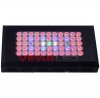
Lighting Vipar LED The Manual.

hey guy just wanted to ask a question, i Need some additional light for my flowering period i have a 600w hps but i also wanted to throw in a low wattage/w high output LED for my flowering cycle i live up north and this vendor will defiantly not sell to me . anyone got any suggestions ?? i'm looking at least a 200w or less power draw , i don't know much about LED'S, :(
You may try Alibaba.com just make sure you do your research. I believe Evergrow actually makes the VIPAR LED lights but I can't say for sure. I'm not sure what you mean by up north as you could be on any continent in this world AND, I don't need you to tell me either. Check what's available on Amazon and Ebay then check reviews on the lights you are looking at, there are a TON of reviews on this very site, in fact probably more LED reviews here than on any of the 5 grow sites I'm a member of.
 
Last edited:
Here is my afgoo, all finished up. I was off on my dates, had to go back and look up a grow journal. These VIPAR lights can do great things and my electricity bill has been pretty forgiving..

That's a cola on a full size paper towel. I can't wait to smoke it lol
 

Attachments

  • afgoo.jpg
    afgoo.jpg
    61.1 KB · Views: 232
hey guy just wanted to ask a question, i Need some additional light for my flowering period i have a 600w hps but i also wanted to throw in a low wattage/w high output LED for my flowering cycle i live up north and this vendor will defiantly not sell to me . anyone got any suggestions ?? i'm looking at least a 200w or less power draw , i don't know much about LED'S, :(

I've just added one of these 165w(90W true) flowering only panels beside my COB, bargain for £40 on ebay auction. Might not be what you are looking for and VIPAR on ebay might not have any left but worth keeping an eye out :)

$_57 (1).jpg

Edit: the more I look at their site I'm guessing this was a 120w non dimmable Aquarium panel that somebody fitted with 3w Reds instead of 2w Blues.
 
Last edited:
Hello,this is my first time posting but I've been reading a lot.My experience is with photoperiod plants and hps@ mh lighting but I'm about to order some autos and i was thinking about trying leds out also can anyone tell me how many watts of leds will equal a 600 watt light or what led would work for a 4x4x6 foot tent any help would be greatly appreciated.
 
Last edited:
Hello,this is my first time posting but I've been reading a lot.My experience is with photoperiod plants and hps@ mh lighting but I'm about to order some autos and i was thinking about trying leds out also can anyone tell me how many watts of leds will equal a 600 watt light or what led would work for a 4x4x6 foot tent any help would be greatly appreciated.

If you look on fleabay there are good deals on a pair of LED panels(you get to direct the light much better than with a single panel), personally I'd go for two 400w panels and a big bucket of calmag!
 
Has anyone any experience with the v200?
It seams pretty good value to me at 60 quid
my tent is 1m X 1m x2m I only plan on growing two at a time either that or go down the line of just one super and scrog grow
with some supplemental cfl I'm thinking I'd be doing okay, what are your 2 cents guys and gals?
 
Yep, I've been reading other people's reviews and some fairly happy folk, just not seen one for the v200
but I also read a report that the 300w version struggled with flower due to lack of red, to make up he had a prakasa cob 100w (which I believe is actual draw) to cover his Red spectrum.
I'll be honest I'm lost with all this led malarkey , each one I come across has different spectrums, which are so damn close to eachother it's unreal
anyone have a link to ideal spectrums required for full grow??? It'd be much appreciated by many folk I'd say
cheers all
 
The fact is just 2 wavelengths in the red band and 2 wavelengths in the blue band can provide over 95% of the light needed for all phases of plant growth. Some manufacturers also deliver UV and/or infrared light bands in their products to enhance resin production and flowering.

Blue light
The most important blue wavelengths are from 430 to 450 nm. This part of the spectrum is also known as cool light. These wavelengths encourage vegetative growth through strong root growth and intense photosynthesis. Blue light is often used alone during the early phases of plant growth, such as starting seedlings, when flowering is not desired.

Red light
The longer wavelengths of light are red in color. The most important wavelengths in the red spectrum are from 640 to 680 nm. These wavelengths encourage stem growth, flowering and fruit production, and chlorophyll production. The red wavelengths are known as warm light and they are naturally more prevalent in sunlight during the shorter days of fall and winter.

It all comes down to the combination of wavelengths the manufacturer is using, and the quality of led you purchase. :pass:
 
Back
Top