

• We are officially moved over to Discourse.
    Autoflower Discourse"
    You will have to create a new login for the new site!
    This current Xenforo-based forum will be preserved as a read-only archive going forward with efforts to better categorize and tag original and canonical content.
    The URL autoflower.org will soon point to the new Discourse site; so we'll be back to business in a few days!
    Send Son of Hobbes a private message if you have any questions!

Drainage Material on the Bottom of your Pot - It's a Myth!

pop22

Frankensteins Lab Leader
Cultivators Club
Joined
Dec 15, 2013
Messages
19,595
Reputation
2,070
Reaction score
60,080
Points
0
Hi again Pop22,

This article explains why better than I did!

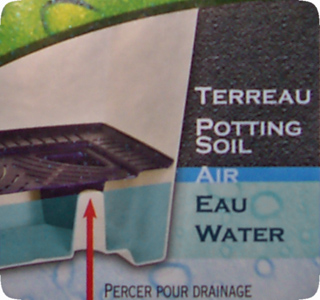
Actually i tried to read the article and that's exactly why i'd prefer to have your own version, nonetheless, not to mention i may happen to have some related relic images in one of my AFN albums:


Good day, have fun!! :peace:
 
Does the same water retension/boundary phenomena also apply to bottom layers used to wick water/bottom feed, but here with the bottom layer tending to oversaturate? If bottom feeding, is it comparably prudent to use consistent, non-layered media/soil (such as skip the perlite bottom layer with AutoPots)?
 
Just like in the article I was "taught" to do it by Grandparents......

I don't do it much anymore, mostly just too lazy. Now I won't do it for a real reason!!!!!

I for sure won't be putting the aggregate layer in my Autopot.
 
From the article:

University of Washington says “Nearly 100 years ago, soil scientists demonstrated that water does not move easily from layers of finer textured material to layers of more coarse textured. Since then, similar studies have produced the same results. Rather than water freely trickling down across the boundary between the layers, water resists crossing it. That’s because the pull of the water upwards in the finer layer offsets any gravitational pull downwards. Instead, water builds up in the finer level above and is only released into the coarser layer below when it’s saturated, like a full sponge that can’t hold any more water.” University of Illinois, and others, echo these findings.

Maybe that doesn't make sense with soil, but that sounds like exactly what I want when growing in small containers with coco. I've had good results bottom-feeding in solo cups with a layer of hydroton at the bottom. It keeps the coco from drying out so quickly (guess that's why), creates an open space where water can freely wash in or out, then roots can fill the open area without competition from algae.
 
Maybe.... I'm curious though. I'd like to see this tested with moister meters in pots with and without.

From the article:


Maybe that doesn't make sense with soil, but that sounds like exactly what I want when growing in small containers with coco. I've had good results bottom-feeding in solo cups with a layer of hydroton at the bottom. It keeps the coco from drying out so quickly (guess that's why), creates an open space where water can freely wash in or out, then roots can fill the open area without competition from algae.
 
Back
Top