
Status
Not open for further replies.
Morning Stoner......
mossy-albums-test-album-picture381362-1aafnimagest.jpg
..Compulsory smoke break for our Friday Worship....

I'll get the clock.

Is everyone Fine.....?....do we have a Theme for the weekend...:grin:..apart from picking on women.....

:wiggle::wiggle::wiggle::wiggle:


You know you couldn't Live without us...
 
Oh yes! It's my turn to pick a theme this week? Been on this autobubble and I'm not too sure what week it is :roflcry:
 
O that's so true dread. MY wife comes home from work and takes everything off and you would think the cloths basket would be a good place NO. its like she through's her clothing EVERYWHERE! They fall were they land.. And then its a "project" for her to do laundry..
This is definitely not a woman thing though. I'm the one that leaves my clothes about and leaves my stuff out everywhere. I think it has something to do with genius :coffee2: My better half is much more tidy than I am. Almost to a fault, I can never find my stuff when she picks up after me :slaps:

Morning Stoner......
mossy-albums-test-album-picture381362-1aafnimagest.jpg
..Compulsory smoke break for our Friday Worship....

I'll get the clock.

Is everyone Fine.....?....do we have a Theme for the weekend...:grin:..apart from picking on women.....

:wiggle::wiggle::wiggle::wiggle:


You know you couldn't Live without us...
Good day Mossy. Missed you 'round these parts lately. Good to see you.
:Sharing One::Smoke more Dope:
 
Morning Aunty! :)

It's a bit early for me .... still a bit floaty from last night

;)

Ooooooh :BottomBeater:
 
1424475_1547895232112739_4618877428316305533_n.jpg
There ya go...My contribution! :Smoke more Dope:...:toke toking:
 
Workplace drug testing 'on the rise', say providers

By Jon IronmongerBBC News
_77972004_de27-1.jpg


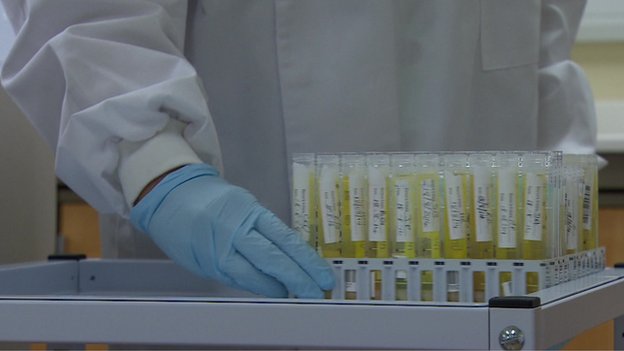
Workplace drug testing has increased significantly in the UK, four leading screening companies have said.
They have seen rises in the number of annual tests carried out of between 40% and 470% over four years.
Workers cannot be made to take a drugs test, but if they refuse when the employer has good grounds for testing, they may face disciplinary action.
Business leaders' increased awareness of workplace drug use is a large factor behind the growth, said LGC Group.
It added that the adoption of a drugs-testing policy is "mainly due to insurance purposes".
The four companies are Alere, Synergy Health, LGC Group and BioClinics. The last two saw rises of 100% and 470% respectively over the four years in the number of drugs tests they conduct annually, although they started from a smaller base.
[TABLE="class: data-table, width: 463"]
[TR]
[TD="class: left"]Screening provider[/TD]
[TD="class: left"]Increase in annual drug testing (2011-14 unless stated)[/TD]
[TD="class: left"]Total number of tests conducted (approx.)[/TD]
[/TR]
[TR="class: row2"]
[TD="class: left"]Alere[/TD]
[TD="class: left"]40%[/TD]
[TD="class: left"]2.5 million[/TD]
[/TR]
[TR]
[TD="class: left"]Synergy Health[/TD]
[TD="class: left"]60%[/TD]
[TD="class: left"]900,000[/TD]
[/TR]
[TR="class: row2"]
[TD="class: left"]LGC Group[/TD]
[TD="class: left"]100%[/TD]
[TD="class: left"]150,000[/TD]
[/TR]
[TR]
[TD="class: left"]BioClinics[/TD]
[TD="class: left"]470% (2010-13)[/TD]
[TD="class: left"]2,400[/TD]
[/TR]
[/TABLE]

Wider business useLianne Gray, LGC Group's strategic account manager for occupational drug testing, said employees in safety-critical roles - such as operating heavy machinery or driving - and government agencies were most likely to be screened.
But she said there was a growing trend for drug testing to be conducted in "more normalised industries", including retail and health companies, as businesses look to "safeguard not only the business, but also the reputation in the field they work in".
Ms Gray said there had been changes in the types of drugs for which businesses wished to screen.
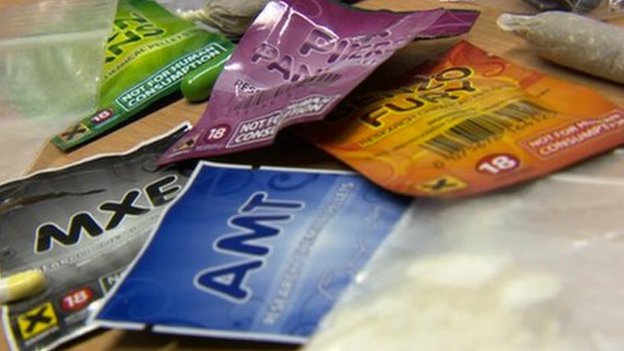
"Traditionally we see requests for amphetamines, cocaine, cannabis, opiates," she said. "Now we're seeing more requests for things like ketamine, steroids, and also for novel psychoactive substances - or legal highs as they're otherwise known."
_76937744_legalhighs.jpg
Businesses are now testing employees for so-called legal highs more frequently

Under current law, businesses must have the consent of employees whom they wish to screen for drugs, and usually this will be in the contract or staff handbook.
Drugs testing is normally performed at random. It is also sometimes enforced prior to employment, on cause - following an accident or incident - or on suspicion.
Stobart Group, which includes the well-known Eddie Stobart haulage business, introduced a drugs-testing policy three years ago.
The services and infrastructure company, which operates London Southend Airport, screens not only its hundreds of truckers but all its employees, including shop workers.
Director of safety and compliance Neil Marston said: "We want to maintain a safe working environment for all our staff. But also for our customers, our visitors who pass through our premises. We're also very proud of our brand and want to protect it."
The increases in drug testing have angered civil liberties groups, who say that the practice is an invasion of people's privacy outside of safety critical roles.
Niamh Eastwood from the drugs advice charity, Release, said they frequently took calls from people who had falsely tested positive for drugs.
Eating poppy seed bread for instance can indicate the presence of opiates in some tests.
She said another problem is that although drug tests may indicate what substances are in the system, they do not indicate if a worker's performance is likely to be affected.

Copied and pasted from http://www.bbc.co.uk/news/uk-29465755


Net next bit is from the TUC website - http://www.tuc.org.uk/workplace-iss...uides-and-reports-reps/drug-testing-workplace


Types of drugs testing

Pre-employment: This is when an employer screens all potential employees or applicants prior to them being employed. This is when people are at their most vulnerable because they are not employed and have far fewer employment rights, are not covered by grievance or appeals procedures and do not have the support of a union. Some job applicants have claimed that they have been denied employment because of a prescription drug they were taking but were not given the opportunity to challenge the result. This is the type of testing favoured by many companies because it is cheaper as it only needs to be done once, however it is also considered to be the least effective because, it is usually based on a urine sample. It is often easier to dilute or substitute the sample as it has to be given in private.
Post incident: This is when an employer tests employees after there is an incident that causes an injury, damage or a near miss. Sometimes this is done automatically after an incident, in other cases it is only done if the supervisor suspects that drugs may have played a part. Often this is introduced in an attempt to protect the employer from liability if an employee injures themselves. They will claim that the reason for the injury was that the employee was under the influence of drugs.
Random: Random testing involves selecting a number of employees at random at regular intervals and testing them. Drugs-testing companies claim that it is a major deterrent, although in the USA, where it is far more common, it has been claimed that users are more likely to switch from cannabis (which remains in the urine for much longer) to harder drugs which disappear from the system much quicker.
Effectiveness

In the past, drug-testing was very unreliable. In recent years, testing has become more accurate and, if a sample is conducted by an approved laboratory and the sample is subject to a confirmation test, false positive results are now less common. That does not mean that drug-testing accurately indicates that a person has taken an illegal drug. In some cases, the metabolites of the drugs detected are the same, or similar, to drugs used in prescription or even over the counter medication. That means that a person can be given a positive result simply because they have taken a flu remedy.
Even when it does identify drug use correctly, what the test shows is simply whether the residues of a drug are present. It cannot tell with any certainty when the person took the drug, or whether they were under the influence of the drug.
So the biggest criticism of any form of drug-testing is that it does not tell an employer what they want to know, which is whether someone is, or was, under the influence of drugs while at work. It will, at best, tell you that the person is likely to have consumed a particular drug in the recent past.
The law

Many European countries have banned pre-employment or random screening. While most allow it in safety critical industries, some have introduced safeguards. France, for instance will only allow it to be done if recommended by an occupational physician.
In the UK, the law on drugs-testing is very unclear. Although the possession of banned drugs is illegal, a person cannot be charged simply because they test positive after a drugs test.
Employers do have a duty to protect the safety of their workplace under the Health and Safety at Work Act. That includes ensuring that employees are not working under the influence of drink of drugs.
Public sector employers also have to abide by the 1998 Human Rights Act, which gives a right of privacy. Employment tribunals have also ruled that an employer cannot dismiss someone simply because they have been found in possession of drugs outside the workplace.
No person can be forced to provide a sample of urine, hair, saliva or blood for any purpose. However, if a person has a contractual obligation to provide a sample, and refuses to do it, courts have ruled that, in certain circumstances that can be grounds for dismissal.
A doctor should not take any sample without getting the 'informed consent' of the person but nowadays most samples are not taken by doctors, and technicians working for a drugs testing company are not covered by the same ethical framework.
Even then consent should be given before a sample is taken but in practice it is very difficult for a person applying for a job, or if ordered to give a sample by their employer, to refuse so the concept of consent is meaningless.
Workers should also be entitled to privacy when giving a sample. The privacy issue is more commonly an issue when urine samples are used. Some employers have argued that another person should be in the room when a person is giving a sample to make sure it is not substituted or diluted. This is unreasonable, and a breach of human rights. In addition a number of people have an inability to pass urine in front of another person.
People who were interviewed for posts with cabling firm Sanmina were then escorted outside Greenock Jobcentre by staff from Pertemps for mouth swabs to be taken - as cars drove past and pedestrians walked by. The tests were taken outside the Jobcentre because Pertemps did not have permission to conduct them inside during interviews. One jobhunter said: "I had my interview and tests and then the person from Pertemps told me they'd carry out a drugs test. She put her coat on and I followed, then we were outside the building, which I thought was strange. Then she handed me the swab to put in my mouth. I didn't want to do it but went along with it because I needed the job - I was totally embarrassed. People were walking by and it was yards away from the main road."
Privacy and data protection considerations have also been addressed by the Information Commissioner's Office, whose data protection code on obtaining and handling information about workers' health puts strict limits on the health information that can be obtained by employers. It concludes that in most instances alcohol and drug testing is an unwarranted intrusion. The fourth part of the Employment Practices Data Protection Code - 'Information about Workers' Health' says: 'Very few employers will be justified in testing to detect illegal use rather than on safety grounds,' adding: 'even in safety critical businesses such as public transport or heavy industry, workers in different jobs will pose different safety risks. Therefore collecting information though the random testing of all workers will rarely be justified.'
The Code's good practice recommendations say:

  • Only use drug or alcohol testing where it provides significantly better evidence of impairment than other less intrusive means.
  • Use the least intrusive forms of testing practicable to deliver the benefits to the business that the testing is intended to bring.
  • Tell workers what drugs they are being tested for.
  • Base any testing on reliable scientific evidence of the effect of particular substances on workers.
  • Limit testing to those substances and the extent of exposure that will have a significant bearing on the purpose(s) for which the testing is conducted.
The 2004 Independent Inquiry into Drug Testing at Work concluded that the legal situation in relation to employment law and drug testing was unclear and called on the Government to introduce regulations to protect workers. It also concluded that attempts by employers to force employees to take drugs tests could potentially be challenged as a violation of privacy under the Human Rights Act, although this would not apply where drug-testing is for genuine safety or security reasons.
If a person were taking a prescribed medicine, including an opiate, which they required for a condition that meant they were disabled under the Disability Discrimination Act and an employer did not employ them, or dismissed them, as a result of a drug test, they may well have a strong case for action against the employer under the Act.
However where an employee is sacked as a result of a positive drugs test, the employer would still have to show that drugs had a detrimental effect on the employees ability to do the job. So if there is no evidence that there has been any drug use at work, or that performance was influenced by illegal drugs then tribunals may consider the dismissal unfair, however it will also depend on the kind of job the person does.
As the law is unclear, in any situation where a person is facing disciplinary action, or dismissal following a positive drugs result, or if they are threatened with action for refusing to take a drugs test, individuals are advised to contact their union for help.
A former worker with Amazon was awarded £3,453 in compensation after managers at the internet giant falsely told him he had tested positive for amphetamine and fired him. Khalid Elkhader was shocked when a random test was returned positive. He appealed and was asked to take a second test. Amazon claimed the test was also positive, and dismissed him for misconduct. It was only after he took Amazon to a tribunal that he learned the second test had actually been negative. He was awarded with compensation after the Glasgow tribunal ruled his sacking was unfair. Khalid was fired after working with the company for two years. The tribunal heard how he had tried to get the second sample tested by his own doctor, and arranged for it to be sent it to the lab. By the time a courier had arrived to collect the sample, it was too late and it had been destroyed. He then arranged for his own doctor to take a sample, which was also negative.


One Last Thing , The tories want to curb Human Rights Rulings from Europe, This will also affect your rights when it comes to drug testing and losing your job if you refuse to take one.

Whilst the tories political spin is saying it is for anti terrorism, don't be fooled we are all targets, european human right rulings of any type will if they get their way can and will be over ruled by UK courts and UK Parliament - http://www.bbc.co.uk/news/uk-politics-29466113


Last edited:
Okay... happy friday everyone, the weekend has landed! We need a theme and it's my turn this week so i was thinking...
Quotes!
quotes from history, movies, quotes that have inspired you at some point... theres loads of good ones out there and i would love to hear some of them!

Heres one i heared the other day which inspired me:

Do your little bit of good where you are; it’s those little bits of good put together that overwhelm the world.” ~Desmond Tutu


Have great weekend everyone, I nominate dazed :stylez rasta smoke:
 
Heres one
What you get by achieving your goals is not as important as what you become by achieving your goals - Zig Ziglar #quotes
 
Morning everyone....:hug:..first sunny day for about a week here...with more thunder storms to come.
Scourge of Outdoor growing getting the plant pots sodden with no sun to dry them out.


still a bit floaty from last night

A Bit floaty blue....


just a Bit....


you IS Staff...it is your Duty to be Totally Floaty from Friday Morning until Monday morning....


Think about the example you are setting the members...:Hookah:...

Go Straight to the Staff Room....
th
..do not pass mods section...and don't return to the board until you are Fit for Duty.....

Fully Floaty


:no:..Just can't seem to get the Staff these days....


:wiggle: :wiggle: :thedogsbollocks: :thedogsbollocks: :thedogsbollocks: Hop digity Hop digity Hop digity


This is definitely not a woman thing though.


Unfortunately...BOTH of us in this house are the same....:grin:..and Both of us hate housework too...doesn't bode well huh...
 
Status
Not open for further replies.
Back
Top